When you’re looking to start a rabbitry, it’s important to think about how and where you will house your rabbits. It’s important that you have a setup that’s comfortable, practical, and hygienic. Not only do your rabbits need to be happy in the rabbitry, but you do too! I would research many different kinds of setups and see what speaks the most to you. There’s no one right way to house rabbits, but there are certain things to avoid.
There are two main, broad, categories for the types of rabbitry setup: hutches/wire cages and colonies.
Colonies can be a good option for someone who has the outdoor space and fencing required, who’s just raising for meat. I have a friend who raises their rabbits this way. They don’t mind which one of their breeding does has the babies, as long as they have grow-outs coming up. For someone who would raise their rabbits for showing, however, this system would not work. I don’t personally have a lot of advice on colonies, but I would suggest browsing YouTube and seeing how you like the setup of other breeders using that setup. Some place to start would be the only colony-style channel I subscribed to, SageSmokeSurvival.
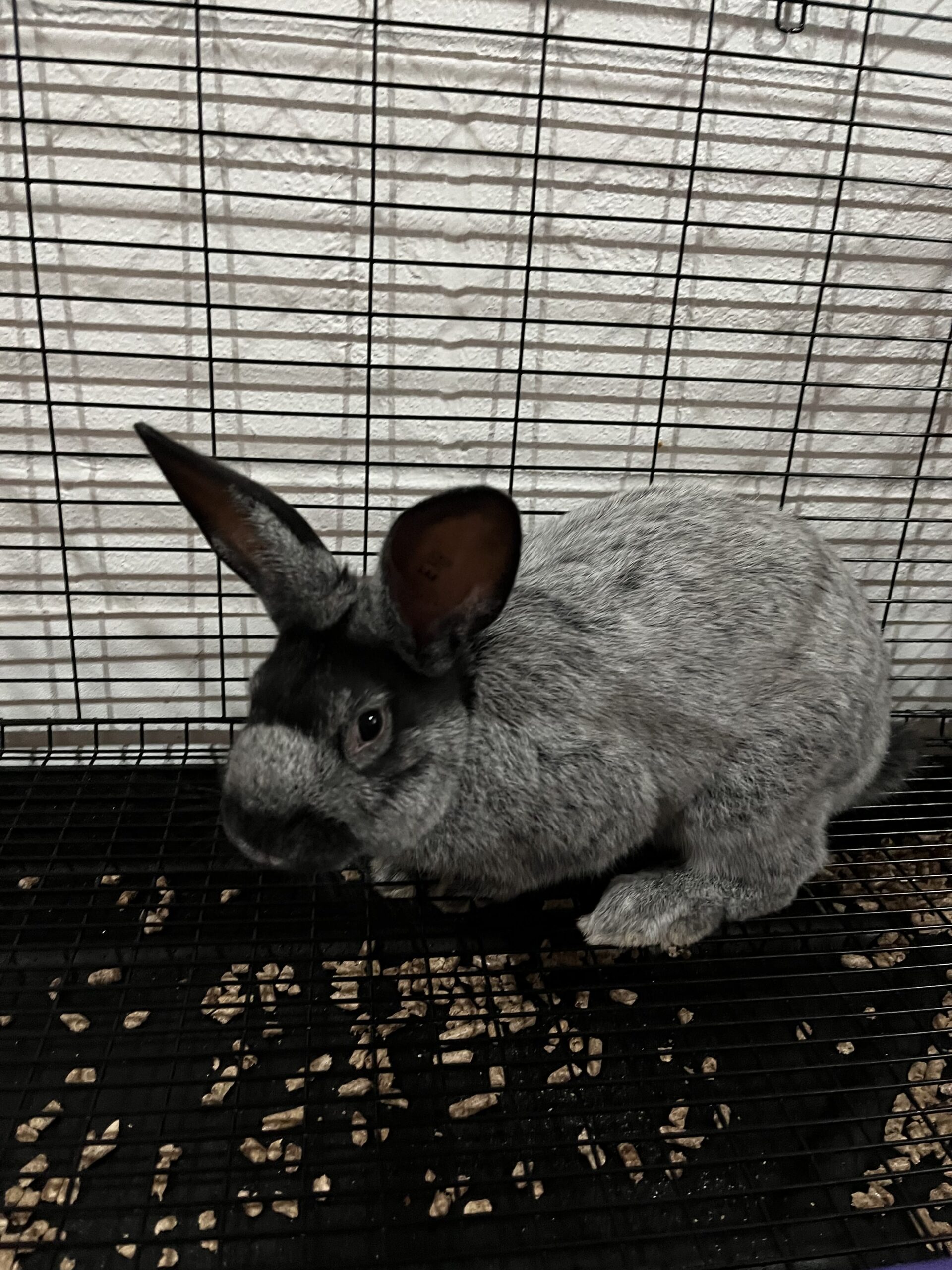
The method I decided to go with in the end were wire cages. I was heavily inspired by MeatRabbits.org’s setup. She has wire cages stacked in a barn with 36×30 cages for breeding does, 30×30 cages for breeding bucks, 5ft transition cages, and 24×24 cages for grow-outs (can you tell I’m obsessed with her channel?). I do something very similar, except I do not have as many 24×24 inch cages for grow-outs as she does. I usually use 36×30 cages for growing litters and house them together unless I identify one I’d like to keep for possible showing or breeding. Then, I do have a few 24×24 cages to house those rabbits.
Inspired by MeatRabbits.org’s 5ft transition cages, I created one for myself that my son and I have taken to calling “mega cage.” Essentially, it’s a 60x30in cage made by me taking the sides off of two 30x30in cages and crafting them into one cage. Instead of installing the frames on the sides, as originally intended when the cages were setup solo, I installed them on the front and back. This makes it so I can have a 30in tray on both sides of the mega cage, and I remove them from the sides for cleaning, instead of from the front. So far it’s working well for when I need more space for grow-outs.
For the location of the rabbitry, I was considering putting my rabbits either in my basement, or outside under my deck. I ended up choosing to have my rabbitry in my basement. There are pros and cons to this, but for me the pros outweighed the cons. If I were to have my rabbits outside, I wanted to follow Teal Stone Homestead’s plans for a grow-out hutch. My dad (the only person I know who has done any form of woodworking lol) was on board to help me build these. However, the cost of the wire and lumber was a big factor, not to mention the time and effort to build it. In the end, I thought it sounded more economical to use the cages indoors.
I will speak more on the types of cages I’ve used another time, but for now, regardless of what brand of cage you use, you have to clean more often when your rabbitry is indoors. MUCH more often. I clean my rabbit cages every other day (or at least close just depending on where trash-day falls). I think this is crucial in your indoor environment being sanitary for your rabbits. They need good ventilation for their fragile respiratory systems and that’s much harder to get inside where you can’t rely on the wind’s help. My basement doesn’t have a ventilated wall, a big fan, or anything similar, so I make sure that I keep things extremely clean. I need to scrub floors and walls occasionally to ensure that rabbits (especially babies and bucks) aren’t spraying out of their cages and making a mess. I need to clean out the tray of the cages every other day to make sure rabbits aren’t able to pee enough for their to be strong fumes from it.
Having rabbits indoors does have a lot of good points though! One big one (and what really persuaded me to have them indoors) was the fact that it was climate controlled. I don’t have to worry about rabbits having heat stroke on a hot day, changing frozen water in the winter, or worrying if thunder or lightning could scare a rabbit too badly. I also don’t have to worry about predators harassing the rabbits at all. It’s also harder for the rabbits to come in contact with bugs (mites or flees), or coccidiosis from contact with wild rabbits. All in all, to me, the peace of mind was worth the extra cleaning.
No matter what you choose, it will cost time, money, and effort to get your rabbitry going. So, do your research, get lots of different opinions, and see what feels right!
Links:
SageSmokeSurvival on YouTube
MeatRabbits.org on YouTube
Teal Stone Homestead Hutch Plans